

EGR Delete Kits and Fuel Economy: Analyzing Real-World MPG Logs
Learn how EGR delete kits affect diesel truck performance and MPG, real-world results, risks, and U.S. legal issues before modifying your vehicle.
image for illustrative purpose
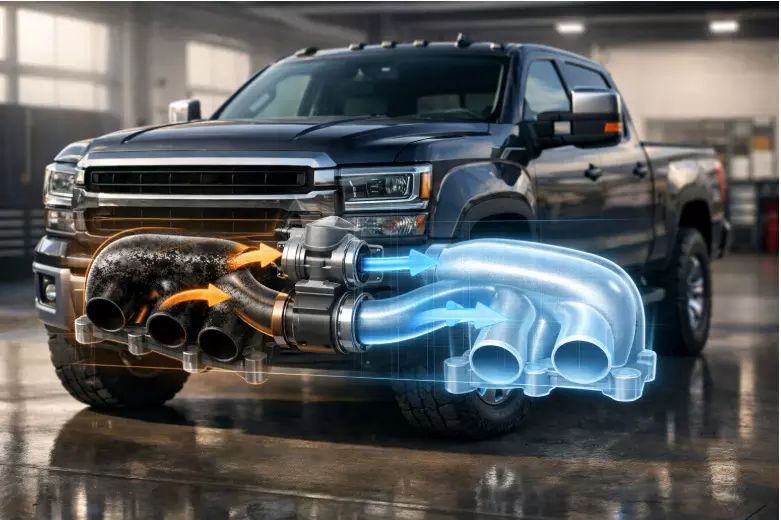
Many diesel truck enthusiasts start their conversations about truck performance mods with the question of whether or not EGR (Exhaust Gas Recirculation) systems impact performance and fuel economy. EGR systems are designed to reduce vehicle emissions, but diesel truck enthusiasts often report that these systems reduce vehicle performance and fuel economy. Within diesel truck enthusiast communities, discussions about egr delete kit and the performance gains that can be achieved become lively. Supporters of EGR delete kits often report fuel economy gains and increase MPG averages, while fuel economy skeptics question whether the MPG gains provide enough justification to warrant the expense of an EGR delete kit.
Concerning the EGR System and its Impact on Performance
EGR systems work by capturing some of the exhaust gases produced during combustion and reversing them through the intake manifold back into the engine to be burned during the next combustion cycle. The theory behind this technology is that by reducing the combustion temperature of the next cycle, NOX emissions are reduced. However, diesel truck enthusiasts have reported that the systems have adverse effects on their driving and overall truck performance.
With time, recirculated exhaust causes deposits of carbon to form throughout the intake system, coating the intake valves and creating restrictive deposits in the EGR cooler. This forces the engine to work harder and reduce its efficiency and fuel economy. Diesel owners often report throttle response lag and diminished power, especially in older vehicles, as EGR systems age.
Besides lagging performance, the deposits require maintenance that may cost thousands to unstick EGR coolers and clean intake manifolds. These practical irritations lead many truck owners to consider EGR delete kits as a preemptive measure to avoid the costs.
Fuel Economy in a Real-World Context of EGR Delete Modifications
Fuel consumption records from diesel truck forums and owner communities show very clear patterns. Regarding specific vehicles and driving conditions, including complimentary modifications, many who added an EGR delete kit report enhanced fuel economy from 0.5 to nearly 3 miles/gallon.
Over the course of a year, the owner of a RAM 2500 with a Cummins engine documented his fuel economy and how a delete system impacted it. On the highway, his fuel economy improved from an average of 18.2 MPG to 19.8 MPG, an 8% increase. In city driving, his fuel economy only improved from 13.1 MPG to 13.9 MPG. These figures held steady across several fill-ups and different driving conditions and durations.
Other owners of diesel engines with a Duramax and Power Stroke system report similar outcomes, although the results differ depending on the engine generation and model year. These diesel engines tend to have older, more troublesome designs of the EGR valve, and they usually tend to demonstrate more dramatic fuel economy improvements. Newer diesels have more refined emission controls and typically demonstrate smaller improvements. There is no questioning the consistency across multiple platforms.
Why Parts Removal Improves Efficiency
The more fuel is burned, the better. If an engine does not have EGR, it cools the combustion chamber and thus more fuel can be burned.
Potential carbon buildup removal also optimizes airflow within the engine throughout its operational life. Less carbon means less effort is used to move air through the system, which leads to less energy used, improving the efficiency of the engine thermodynamic system and lowering the amount of fuel used.
Furthermore, diesel owners tend to adjust their fuel delivery and boost pressure after installing their EGR delete kits. These modifications are synergistic, meaning the end result of the combination of alterations is greater than the result of each change made on their own and has the potential to surpass what any single change could achieve.
The Range of Fuel Economy Improvement
Not every vehicle will see the same amount of change after an EGR delete system is installed. Weight of the vehicle, type of tyres used, driving philosophy, and terrain of the driving route all play an important role on the overall fuel consumption result.
Vehicles that mainly drive on the highway will see the most changes compared to vehicles that do a lot of stop and go driving. On the highway, the engine is able to take advantage of the better airflow and less restrictions. On the other hand, urban driving with a lot of acceleration and braking does not maximize these advantages.
The state of the EGR system prior to removal is also quite important. Vehicles with systems that are genuinely heavily clogged are going to see more dramatic improvements than those with substantially clean components. Some owners complain about virtually no changes with the deletion of newer systems that are well-maintained and have not yet accumulated a substantial amount of carbon.
Legal Considerations and Responsible Decision Making
It is illegal to modify the emissions control systems of any vehicles that are driven on public roads in the United States. Under the Clean Air Act, removing pieces of emission equipment is regulated and the enforcement of such regulations has become more frequent. Therefore, it is important for owners to understand the legal implications of their modifications.
Vehicles that are designed for off-roading and racing have different legal requirements, resulting in a valid market for EGR deletion components and other performance products. Many companies have their products labeled for "race use only" or "off-road use only" to comply with regulations surrounding street-legal vehicles.
Responsible enthusiasts understand the performance gains, legal pros and cons, and the impacts on the environment. Modifications on off-road vehicles are preferred by some, while others make legal trade-offs such as better quality fuel and maintenance to enhance performance within the law.
Making An Informed Choice About Engine Modifications
In deciding whether to purchase an egr delete kit, the trade offs involved are well beyond fuel economy numbers. While a performance enthusiast enjoys an increase in throttle response and less maintenance worries, a conscience stricken owner worries about emissions. Analytical thinking, combined with real-world data, exonerates the claims made in a marketing context to foster informed decisions, individual to each owner, and based on fact rather than speculation on a forum.
FAQs
Is it possible that my engine could be harmed if the EGR system is removed?
The newer diesel engines are designed to keep the systems as they are, so removing them will alter the intended engine airflow. Still, with a good quality delete kit, these issues will be addressed. The reliability over time will be determined by how well the system is installed, and a tune that will best the new system the delete kit will introduce.
How much improvement to fuel economy can be expected after a delete kit is installed?
Logs obtained from real world scenarios show improvement in fuel economy by as little as 3%, up to 15%. Most owners claim to have a fuel economy improvement in the 5 to 8 percent range. It is important to note that a lot of factors can play into the fuel economy improvement, such as how the vehicle is being driven, the condition of the vehicle, and if there are other modifications in conjunction with the delete system.
Is it necessary to have the EGR delete tune conducted simultaneously with the EGR delete?
While the physical removal of the EGR systems helps, custom tuning optimizes the engine's parameters to adapt to the EGR delete. The experienced installers recommend that a tune be done to avoid a check engine light, and to get the most from the delete.





